Wide-profile panel part numbers
That width matters for a panel swap: a single bent or cracked section on a 16-footer is a different part number than the same damage on an 8-foot single, and not every supplier stocks the wide profile in depth.
Leawood, Shawnee
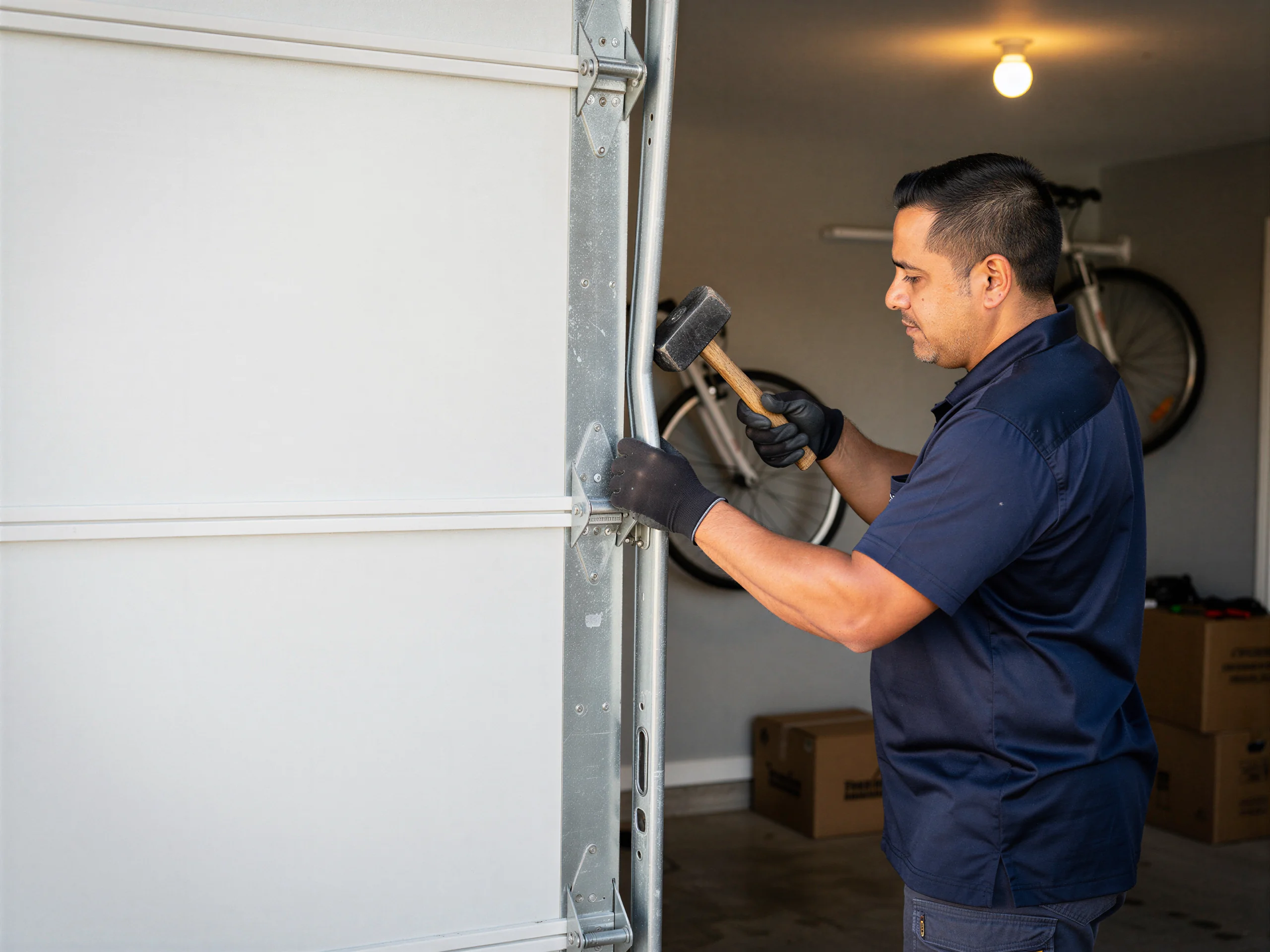
Panel replacement for Leawood's 1989-era steel sectional doors, matched to the wider raised-panel styles common on the suburb's larger lots. Serviced from Shawnee, 12 miles out.
Downtime
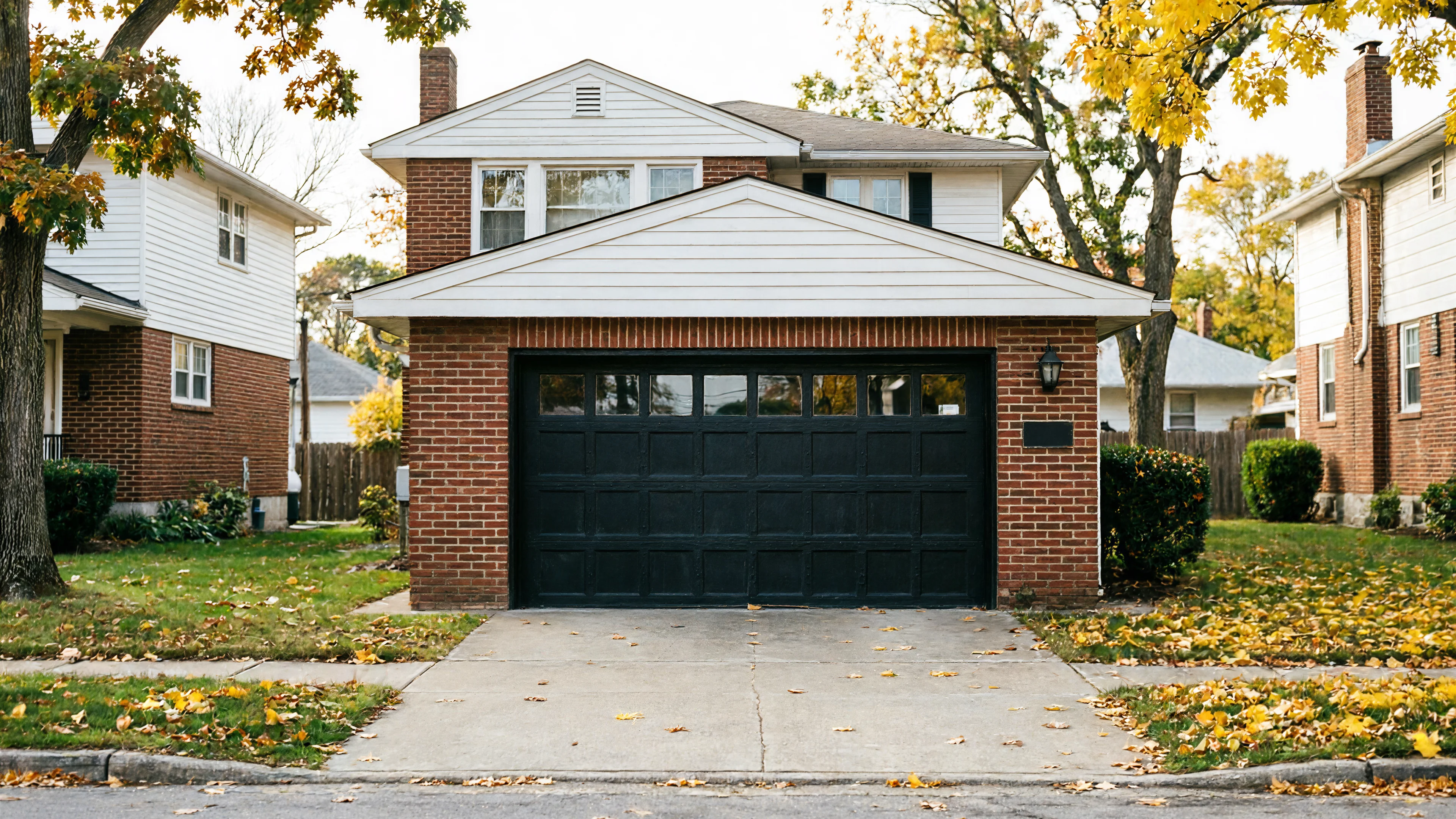
Most Leawood houses went up around 1989, which put them right at the start of the foam-injected steel door era - thicker sandwich panels, wider raised-panel profiles, and on a lot of these homes a 16-foot double door instead of two singles.
That width matters for a panel swap: a single bent or cracked section on a 16-footer is a different part number than the same damage on an 8-foot single, and not every supplier stocks the wide profile in depth.
We run out of Shawnee, about 12 miles from Leawood, so we're not pulling a panel off a shelf five minutes away. What we do instead is confirm the exact panel height, the ribbed or raised-panel face style, and the color match before we load the truck, so the trip out counts for something instead of a second visit.
On a common size in a common color you're usually looking at one visit. On a less common width or a face style that's been discontinued, we tell you that up front rather than guess.
Watch-outs
The single most common call on a 1989-built door here is a bottom panel gone soft or split - the lowest section takes every mower nick, every bike pedal, every winter of road salt tracked in off the tires, and on steel doors from that era the galvanized coating is thinner than what's made today.
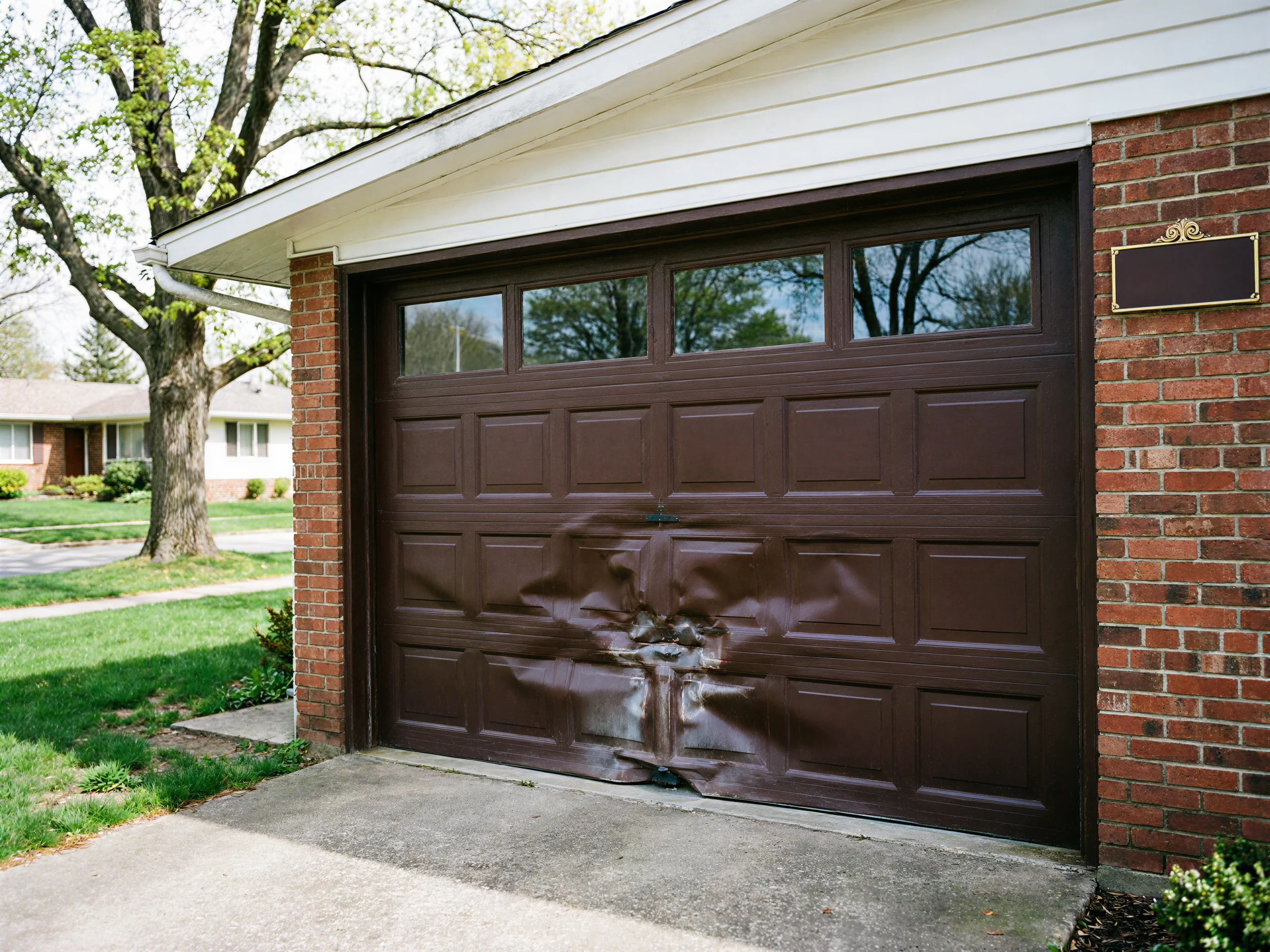
The second is a bowed middle panel, usually from someone backing into a partway-open door, which on a wide double door shows as a visible wave across the whole section, not just a dent.
We also see delaminating insulation - the foam core separating from the steel skin - on doors that have had thirty-plus winters to expand and contract. None of these affect the spring or opener directly, so the door usually still runs.
That's actually the trap: a cracked panel that still opens and closes gets ignored until the crack lets water in behind it, and then you're replacing two panels instead of one.
On the truck
We stock steel sectional panels in the standard residential heights and in both the narrower ribbed face and the wider raised-panel face that shows up on Leawood's larger doors, including the 16-foot double-door width. For a door built around 1989 we're usually matching an embossed steel panel with a polystyrene or foam core - we check which one you have before ordering, since swapping a foam-core section next to a polystyrene one can leave a visible seam in cold weather. What we don't carry on the truck is a custom wood-look fiberglass panel or anything in a discontinued color - those get special-ordered, and we'll tell you the lead time once we've got the exact match in hand rather than quote a guess.
Local causes
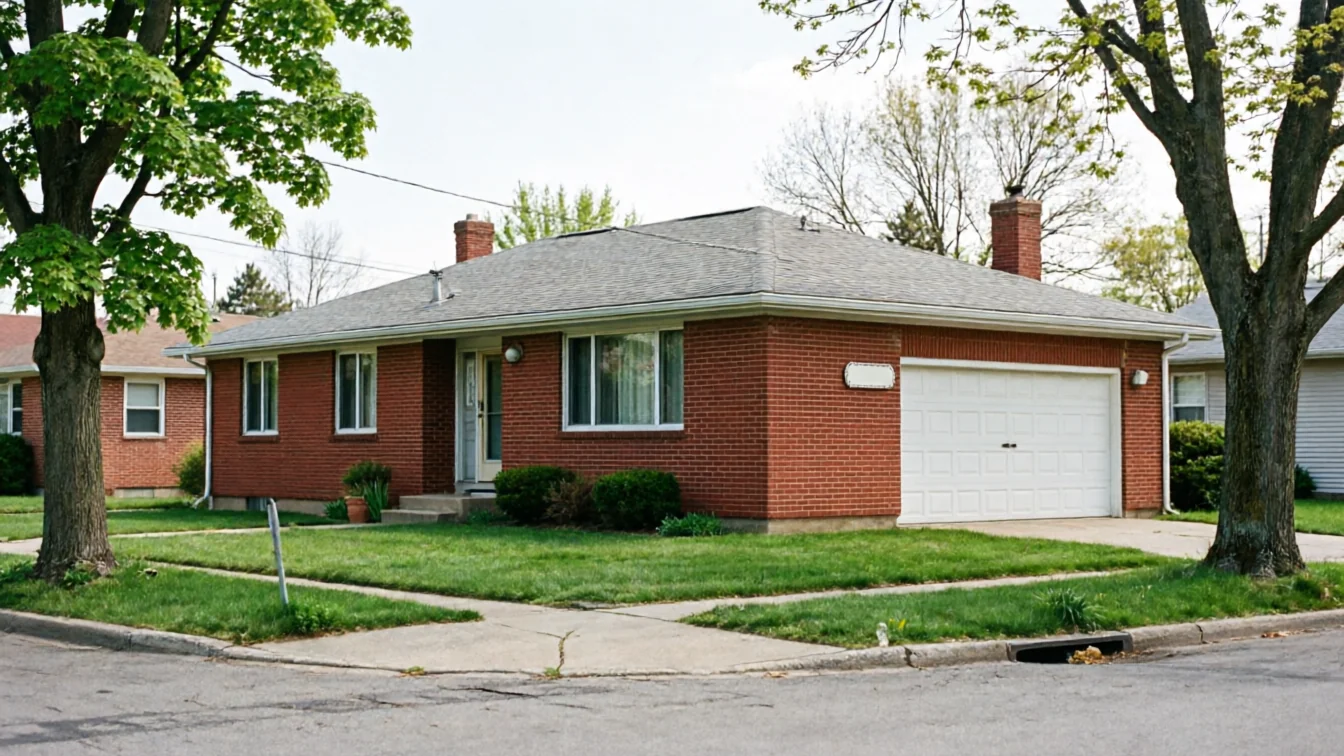
Leawood sits in the same cold-moderate climate band as the rest of the service area, which means steel panels here go through real freeze-thaw cycling every winter - the metal contracts in the cold, expands in a January thaw, contracts again, and over thirty-plus years that's what opens up seams and loosens the foam bond inside a panel. Add in that a lot of these homes carry wider, heavier double doors on bigger lots, which puts more flex across a single panel every time it's driven past at an angle or caught by a gust. We don't see the same volume of calls here as in neighborhoods with denser, older housing stock, but when we do get called out it's almost always the bottom panel first, for the reasons above - moisture and road grit hit that section hardest, regardless of the house behind it.
Questions
If your door's steel profile and color are still in production, yes, a new panel should sit flush and match closely. If the door is an older discontinued run - common on homes built in the late 1980s - we'll check for the closest match and tell you honestly if there will be a slight tone difference between old and new steel.
We stock panels in the common heights and both ribbed and raised-panel faces used on wider doors, but a 16-foot double door panel is a bigger, heavier piece than a single-door section, so we confirm the exact width and face style before the visit to make sure we bring the right one.
If more than one or two panels are damaged, or the insulation has delaminated across several sections, replacing the whole door can cost less than chasing matching panels on an older discontinued run. We'll give you both numbers before we start.
Explore more
Ready when you are
Shawnee Garage Door Pros repairs and installs garage doors, springs and openers in Shawnee, KS and the surrounding area.