
Blog
What That Noise From Your Garage Door Is Actually Telling You
Shawnee homes built mostly 1950-2004 carry hardware that ages in specific ways. Here's what grinding, popping, and slapping sounds actually tell you about your door.
What Local Conditions Do
Most of Shawnee's housing stock went up between 1950 and 2004, with the bulk of it dating to the 1980s and 90s, spread across the eighteen or so named pockets that make up this part of Johnson County. That matters for noise because hardware ages on a schedule, not randomly. A door installed when a subdivision was built is now anywhere from 20 to 70 years old, and the track brackets, hinges, and torsion springs on a house from that 1980s wave are hitting the point where metal fatigue and dried-out lubrication start making themselves heard before anything actually fails.
A grinding sound on the way up usually isn't the opener - it's a roller that's worn flat on one side, riding in a track that was installed for a door half its current weight (insulated retrofits added mass that original hardware wasn't sized for). A rhythmic thunk every few feet is almost always a bent track section, something more common on homes where the garage sits on a slab that's shifted slightly over three or four decades. None of this is dramatic. It's just what happens to houses this age, in this town, on this timeline.
The Seasonal Bit
Shawnee sits in a cold-moderate climate band, which means the garage door hardware here goes through a real freeze-thaw cycle every winter, not just a few cold mornings. That cycle is hard on anything with moving metal parts and no climate control around it. A spring that was quiet in October can start popping or creaking by January, not because it broke, but because cold-contracted steel coils bind slightly tighter and the lubricant that was fine in summer has thickened.
A slapping or snapping sound specifically on the first cold mornings of the season is a strong sign of a cable or spring under more tension than usual, and it's worth paying attention to rather than waiting it out - a spring under extra seasonal load is more likely to let go without warning. A low hum that wasn't there in warmer months, on the other hand, is often just the opener motor working slightly harder against stiffer grease, and that one usually isn't urgent. The difference matters, and guessing wrong in either direction costs you either money or safety.
The Common Mistake
The mistake we see most in Shawnee is homeowners spraying WD-40 on a noisy spring or track and calling it fixed when the sound goes quiet for a week. WD-40 is a solvent, not a lubricant - it strips old grease rather than replacing it, which is why the noise often comes back louder a few weeks later. On a house from the 1980s-90s stock that makes up most of this area, original hardware wasn't built to run dry, and a spring that's been de-greased repeatedly over years wears through its coating faster than one left alone.
The honest limitation here: we can't tell you over the phone whether a noise is a five-minute lube job or a spring near the end of its life. Torsion springs don't give much warning before they go, and on a door built to older 1980s weight specs paired with a heavier retrofit insulated panel, a spring at the end of its rated cycles can fail with no noise at all right before it does. If your door is making a new sound it didn't make a year ago, that's worth a look before you decide it's nothing.
What Is Going On
Put together, the pattern in this service area - 40,266 owner-occupied houses out of roughly 68,062 households, most of them carrying hardware installed sometime between 1950 and 2004 - means noise complaints here skew toward age-related wear rather than installation defects. A household income around $96,725 median also means a lot of these owners replaced an opener or added insulation at some point without replacing the track or springs underneath it, which is its own source of mismatched-hardware noise.
If you're near Lake Quivira, Edwardsville, or Bonner Springs, the housing ages are similar enough that the same diagnosis usually applies. The short version: a new noise on an old door in a cold-moderate climate is rarely nothing, and it's rarely an emergency either. It's a door telling you its hardware is reaching the end of what it was built to do quietly.
Questions
Common questions
My garage door started squeaking only in winter. Is that serious?
Usually not urgent on its own. In this climate, cold-thickened lubricant on rollers and hinges is the most common cause, and a fresh application of proper garage door lubricant (not WD-40) often quiets it. If the squeak comes with a louder pop or snap, that points more toward spring tension and deserves a look sooner.
Why does my door make a loud bang when it closes?
On houses in this area built mid-century through the 1990s, a bang on close is often a worn bottom roller dropping into the track groove, or a loose hinge letting a panel flex and slap shut. Both are common on hardware this age and both are worth fixing before the slack gets worse.
Should I lubricate my own garage door hardware?
Yes, periodically, with a lithium or silicone-based garage door lubricant on hinges, rollers, and the spring coils - not WD-40, which strips grease rather than adding it. If a noise persists after lubrication, that usually means a worn part rather than a dry one.
Recommendation
You Might Also Like
More garage door guides for Shawnee homeowners.
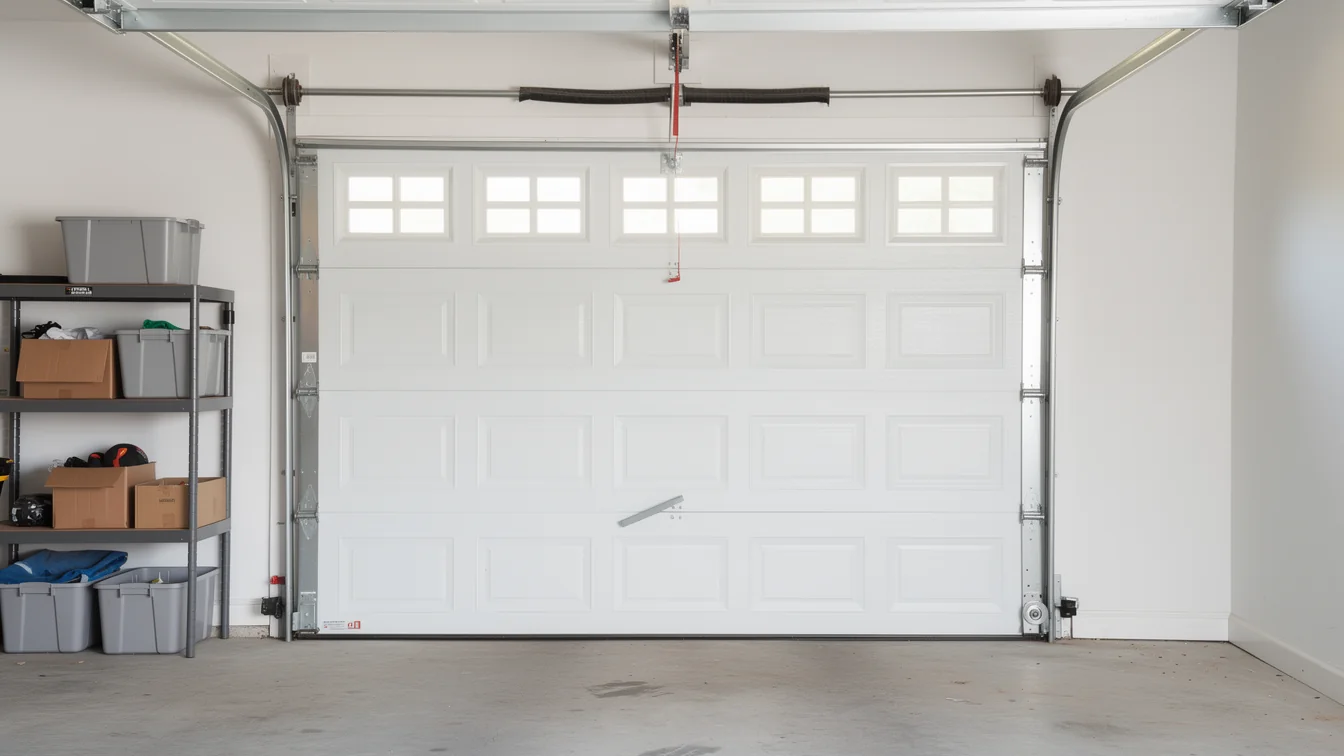
Why a Door Goes Off Track in a Shawnee Garage
Shawnee homes built between 1950 and 2004 carry track and roller setups that react to freeze-thaw swings.
Read guide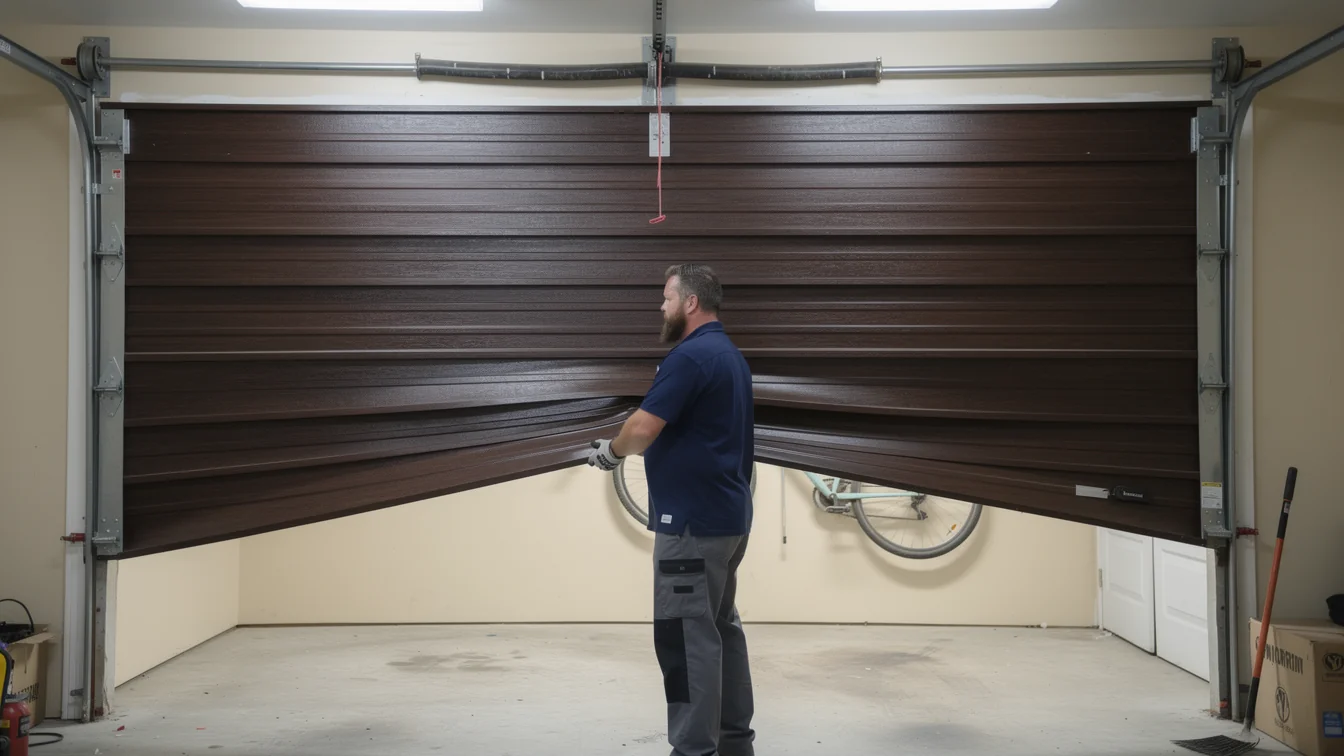
What a Shawnee Service Call Actually Covers
Shawnee homes run 1950 to 2004 stock, mostly 1980s-90s builds, in a cold-moderate climate.
Read guide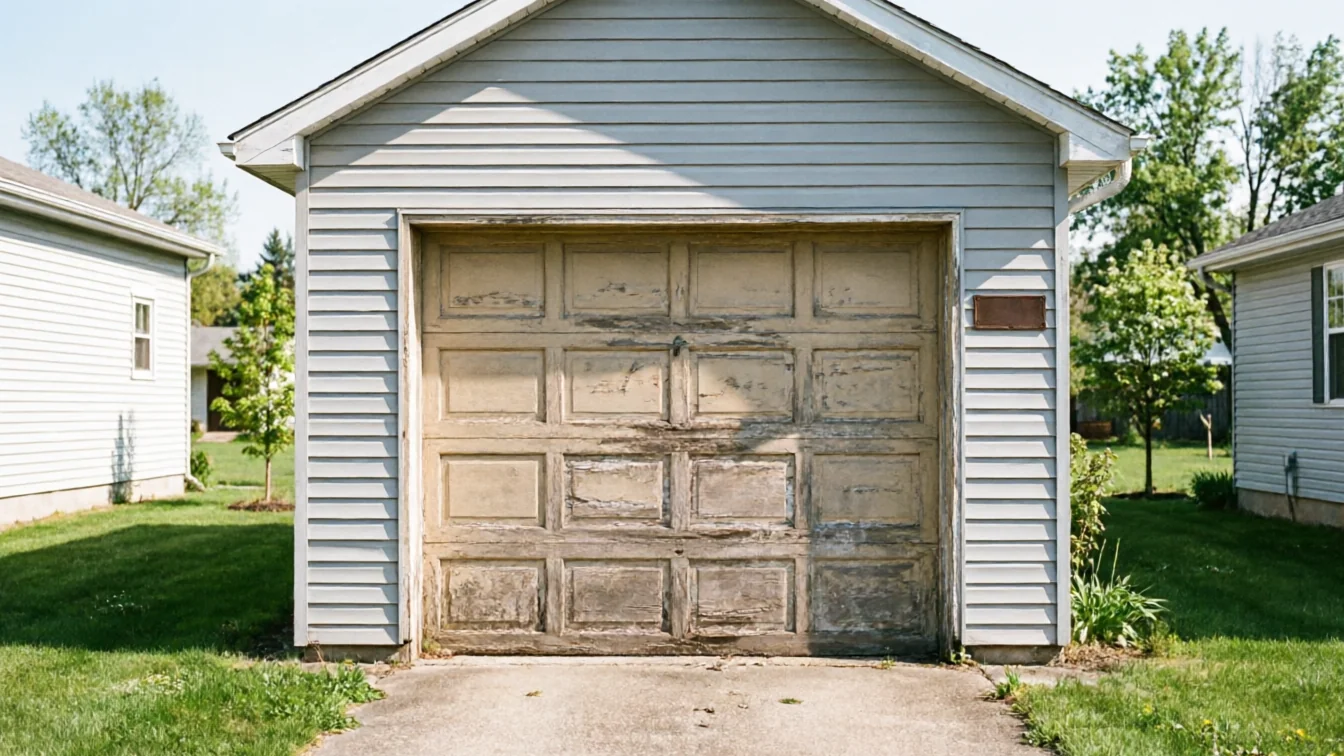
Is Your Shawnee Garage Door Worth Repairing, or Time to Replace It?
Shawnee homes mostly date to 1950-2004, median around 1980, in a cold-moderate climate.
Read guideReady when you are
Need a garage door sorted in Shawnee?
Shawnee Garage Door Pros repairs and installs garage doors, springs and openers in Shawnee, KS and the surrounding area.